
“The secret to happiness isn’t luck, it’s a state of mind you can learn to enter at will”
As humans, we seem to always be on the search for that elusive state of happiness. If you’ve looked at others and wondered – how are they always so happy? What do they have that I haven’t? Then read on, because we all have the potential to generate happiness whenever we want.
Remember back to a time when you’ve been so deeply absorbed in something that the world around you simply dissolved. Hours passed without hunger, pain, or worry.
You were somewhere else entirely. You were in flow.
This has been called many things, by many people: a magical state, an altered state, being “in the zone.”
In flow, time suspends itself, ego and self-identity retreats, and what remains is something remarkably close to bliss.
Flow isn’t the preserve of elite athletes or inspired artists. It isn’t mystical, and it isn’t rare or down to luck of draw or your personality. Flow is, as you’ll discover here, a deeply human capacity. It’s something that naturally lives in all of us and one we can all access and enhance.
In this blog I do a deep dive into flow states, the science behind them, and how to find yours.
“Happiness is not something that happens. It is not the result of good fortune or random chance. It is something we can cultivate by taking control of our inner experiences.” – Mihaly Csikszentmihalyi, Flow: The Psychology of Optimal Experience

The man who named the concept
To understand flow, we need to start in the rubble of post-war Europe. A young Hungarian boy, Mihaly Csikszentmihalyi, watched the adults around him, some broken by what they’d endured, others surprisingly, inexplicably resilient. He became fascinated: what gave certain people a life worth living, even amid devastation?
That question drove much of his life’s work. Csikszentmihalyi (cheeks-sent-me-high) became one of the most cited psychologists in history. He interviewed thousands of people, chess players, surgeons, musicians, rock climbers and factory workers and found something extraordinary. When asked to describe their most fulfilling moments, all converged on the same experience, this being a total absorption in a challenging activity, a dissolving of the self, and a sensation of being carried forward effortlessly, like a current.
In 1990, he published Flow: The Psychology of Optimal Experience and coined the term that would reframe how we think about human happiness.
His TED Talk on the subject remains one of the most-watched psychology talks of all time.
What flow feels like
If you’ve ever been lost in a great novel, swept away by music, or so absorbed in creative work that you forgot to eat, you’ve been in flow. As someone who trained as an artist, I know the feeling intimately: pencil moving, hours disappearing, risk taken without hesitation, no critical voice evaluating.
Csikszentmihalyi’s research identified a consistent set of subjective qualities that define the flow experience as:
“A sense of ecstasy – of being outside everyday reality. Great inner clarity. A vanishing of self-consciousness. Timelessness. And underneath it all, a deep, quiet certainty that this – right here – is enough.”

People in flow report:
- Complete absorption in the present moment; the past and future cease to exist.
- A profound sense of calm and wellbeing, despite high levels of engagement.
- Deep inner clarity; knowing exactly what to do, and how well you’re doing it.
- A distortion of time; hours feel like minutes, or vice versa.
- An intrinsic motivation so powerful the activity becomes its own reward.
- A sense of connection to something larger than oneself.
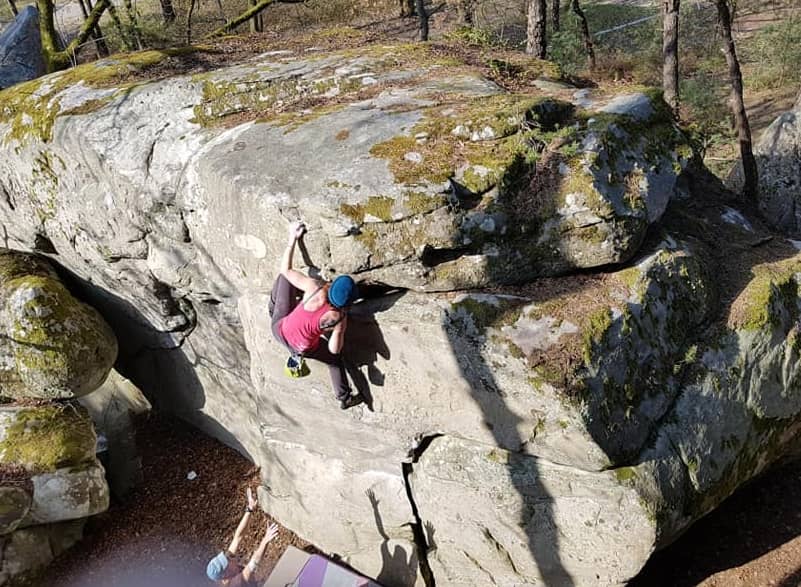
This last quality is striking. Flow dissolves the boundary between self and world. Climbers describe merging with the rock face. Musicians speak of becoming the music. Dancers lose the sensation of a body that dances and simply become the dance.
People talk about their experiences as having an almost spiritual quality.
What happens inside your brain and body
Flow is a measurable neurological and physiological state. Our brains can only consciously process around 136 bits of information per second. During deep flow, the task at hand demands virtually all that bandwidth so there’s no room left to wonder whether you’re hungry, tired, or what other people think of you.
During flow the prefrontal cortex quietens and goes ‘offline’, so that part of our mind that’s responsible for self-monitoring and the inner critic steps aside and self-consciousness evaporates. You stop being you and become one with what you’re doing.
In the flow state, a casecade of neurochemicals are released, these being:
- Dopamine – focus and reward
- Norepinephrine – alertness and arousal
- Anandamide – lateral thinking and pattern recognition
- Serotonin – social bonding and wellbeing
- Endorphins – euphoria and pain suppression.
Here’s a interesting thing to consider. Different recreational drugs act on the corresponding cell receptors as each of these neurotransmitters (cocaine, amphetamine, cannabis, MDMA, psilocybin and opioids). If someone were to take all of these together, it would have a devastating effect. Our body produces them in a healthy blend during flow states. It just goes to show how incredible the organism that we live in is.
The result is an altered state, like one we get through ceremony, mediation, daydreaming and dance.

Flow lives in many places
Flow is not the property of any single activity. Anywhere the right conditions exist, it can emerge. You can find it when rock climbing, surfing, painting, drawing, music, writing, martial arts, dancing, Tai Chi, yoga, chess, cooking, swimming, deep work, performance, reading, gardening.
Notice how varied this list is. Flow doesn’t require danger or virtuosity; it simply requires the right relationship between challenge and skill. Even cooking a complex meal, solving a difficult problem at work, or becoming absorbed in a garden can become a gateway.
Creating the conditions for flow
When met, these eight conditions reliably produce the flow state. Understanding these gives us the map and the means to find our way there intentionally.
1. Challenge–skill balance
The task must stretch you, enough to engage you fully, yet not so much that you’re overwhelmed. Too easy and it brings boredom and too hard creates anxiety. Flow lives between the two.
2. Clear goals
Vague intentions produce vague engagement. Flow requires knowing exactly what you’re trying to do, specific, proximal targets that give direction to your attention.
3. Immediate feedback
The activity itself must tell you how you’re doing, in real time. A musician hears a wrong note the moment it’s played. A climber feels the grip slip. Feedback closes the loop and keeps attention locked in.
4. Action–awareness merging
When you’re truly in flow, you stop thinking about what you’re doing and simply do it. The distance between thought and action collapses. The activity becomes second nature.
5. Concentrated focus
Flow demands full attention. External distractions and internal chatter must be crowded out by the task. This is why distraction-free environments matter.
6. Sense of control
Not the illusion of certainty, but the feeling that you can respond to whatever comes. That you have the skills to meet the challenge. Flow produces a quiet, grounded confidence.
7. Loss of self-consciousness
The inner critic goes quiet. Self-monitoring dissolves. Freedom from the watching, judging self allows intuition and creativity to operate without interference.
8. Transformation of time
Time bends. Hours compress into minutes; or a single moment stretches into something rich and full. The ordinary sense of time passing simply stops applying.
There’s a ninth quality that underpins all the others. Csikszentmihalyi called it the autotelic experience (from Greek autos (self) and telos (end)), meaning an activity that’s intrinsically motivated and done for its own sake.
Some people who are more naturally disposed to find intrinsic meaning in what they do and to engage with life for the richness of living it rather than any rewards it might yield are sometimes called ‘autotelic personalities’.

How to find your flow
The good news is that flow can be cultivated, refined, and increasingly accessed with practice and intention.
1. Start by asking yourself three questions before you begin:
- What do I want to achieve from this activity?
- How will I know when I’m doing it well?
- Is the challenge calibrated to my current skill level? It must be just harder than your current capability.
2. Eliminate distractions and create an environment where you can concentrate.
3. Keep raising the bar and extending the difficulty so you operate at the edge of your comfort zone.
4. Stay out of self-criticism, pay attention to any feedback and course correct. Follow your genuine interests as flow cannot come with activities that hold no real meaning for you.
Why flow matters for your health
Flow is about much more than enjoyment; it benefits your health.
When you’re in flow, there’s no room for anxiety because your bandwidth is all taken up with the task at hand.
Over time, people who regularly access flow report greater emotional resilience, reduced baseline anxiety, and a stronger sense of personal agency – that being the feeling that they can shape their own experience of life.
The question of what makes life worth living can be found in flow. When we’re absorbed in something that matters to us, that challenges us, and that rewards our attention, we feel most alive because we’re fully present in the moment.
An invitation to disappear
Flow is an invitation to lose yourself and in doing so, something essential remains. A quiet, capable, fully present self that exists beneath all the noise of modern life.
All that’s needed is a challenge that for you is worth rising to, a willingness to be absorbed, and the patience to find the activity that lights you up from the inside. Flow can be found everywhere. The question is whether you’re willing to step in and find your edge and let flow in.
Further reading: Flow: The Psychology of Optimal Experience by Mihaly Csikszentmihalyi (1990) · TED Talk: Flow, the Secret to Happiness
If you enjoyed this blog, then please do share it on Linkedin, Facebook and Instagram.
and please connect with what’s written then do connect with me there too.
