
The challenge with teams is they’re made up of individuals. The great thing about teams is…they’re made up of individuals!
Each team member has an individual, unique personality built through their socialisation, culture, education and a lifetime of experiences. Each has their own way of thinking and behaving.
You put these individuals together in a team and expect things to just work. It’s a nice idea, yet not that simple.
The benefits of teamwork
Teamwork is a collaborative process where people combine skills, perspectives, and effort toward shared goals, within a cooperative environment. Simple in theory, yet complex in practice. Teams are human systems, which run on mindset, emotion, communication, perception, and behaviour.
In the Apple TV series Pluribus, an alien event transforms most of humanity into a peaceful, hyper-cooperative hive mind known as “the Others,” where people think, act and move in total harmony with one another.
On the surface, it looks like the ultimate example of teamwork: no misunderstanding, conflict or competing agendas. Everyone is aligned and working together in a seamlessly, almost robotic coordination, efficient and harmonious, yet lacking curiosity, challenge and creativity.
Alignment and shared purpose are vital for good teamwork. Yet if everyone simply thinks the same way and follows the same script, a group loses the very human qualities that make teams innovative and resilient.
The best teams find the balance, aligned around a shared goal, yet are still full of diverse perspectives, skills and questioning.
Why teams get stuck
Having teams that work well together consistently is a challenge that few businesses and organisations fully get right. Many get it right some of the time, then things change, team members leave or get replaced, there’s an organisational curve ball, the market changes, people get complacent or stuck in old habits, and the team doesn’t work as well as it used to.
There are always signs when a team begins to have problems; subtle friction, less conversation, meetings feel awkward, there’s gossip, a plateau in performance and a dip in energy. The issue rarely sits in strategy or capability; it sits in how team members interact.
Most organisations invest heavily in KPIs, structure, systems and processes. While essential, they don’t guarantee that teams will communicate or work together well. Human resources focus on behaviour, policy and legality. Team days focus on ‘bonding’. Yet few look or work at the individual level. This is where Neuro Linguistic Programming (NLP) becomes extremely valuable.
In my experience, three persistent challenges repeatedly show up:
1. The invisible filters
Every team member interprets reality through personal experience, beliefs, and assumptions. For instance, two people hear the same message and form different meanings, which can create misunderstandings that grow and spread.
2. The unspoken expectations
People assume others share their standards for quality, pace, communication style, and responsibility at work. When expectations are implicit and not explicit, there’s ample opportunity for frustration to grow.
3. The emotional contagions
Tensions can affect the emotional climate of an entire team and raise stress levels. Personnel changes add new layers of complexity because while new team members bring fresh ideas, strengths, norms, and energy, they need to be integrated gently. Integrating several new team members at the same time is rarely given sufficient consideration, planning or focus. It’s no wonder the performance of teams dips when personnel change.

NLP and our internal operating system
Behind every single behaviour there’s an internal process taking place comprised of their thinking, attention, emotional states and the language they use.
NLP explores this internal operating system. It examines the relationship between neurology (how we experience the world), language (how we structure meaning), and patterns of behaviour (how we act). When teams understand these patterns, collaboration is intentional rather than accidental.
Miscommunication rarely comes from incompetence, it usually stems from mismatched maps of reality. People delete information, distort meaning, and generalise from limited experiences. These mental shortcuts help us function quickly, yet they also create misunderstandings.
How NLP improves teams
Enhances communication: By teaching teams to be precise with their language, to observe, be curious, ask clarifying questions and listen beyond the words for intention and emotion. When conversations are cleaner and clearer, it’s easier to make decisions and so meetings can be more efficient timewise.
Enables emotional regulation and state management : Productivity is a result of the collective state of the team. Under pressure, it’s easy for attention to narrow, creativity to reduce and patience to decrease. When this happens, trust reduces too.
NLP provides tools for emotional regulation and state management. It teaches us awareness, so we can recognise physiological signals, manage stress responses, and access resourceful states deliberately.
It’s performance psychology. A leader who can regulate their state during a challenge influences everybody and teams led by leaders who can regulate their nervous system make better decisions.
Builds rapport: Conflict is inevitable in teams, especially ones that are changing. Rapport is our social glue and builds trust so reducing conflict. Rapport is a foundational skill taught in NLP, enabling teams to match communication styles and behavioural cues. Consequently, people feel safer and more comfortable to share their ideas, take risks, and have constructive disagreements.
Employs reframing: Shifting your perspective to uncover useful meaning and maintain responsibility. Reframing is a useful tool to deal with feedback from a perspective of curiosity or solution focus, for example to move from, ‘they said that which means they…’ to ‘I wonder what they meant by that?’
5 NLP Tools for Team Alignment
1. Clear, specific, times agendas for meetings
Ensure agenda items include the type of outcome the proposer is looking for eg. open discussion of an idea, an agreement or decision and allocate length of time for each item.
Frame questions with ‘What’. “What specific points must we consider to reach a decision on this?”
2. Ask precise questions
Move from the vague statements to specifics. For example, ‘There’s no communication here’, becomes, ‘Who specifically is not communicating with whom’, and ‘What’s specifically happening?’ This avoids assumption and recovers detail, meaning topics can be discussed more constructively.
3. Take 1 minute to reset your state
Prior to any important conversation, prepare yourself. Take a minute to focus on your breathing, open up your posture and recall a time you were successful in the past. Your physiology influences your thinking and can put you in a state of ease.
4. Use ‘I’ language to take ownership
Shift from blaming others to taking responsibility. For example, ‘it was his fault this came in late’, to, ‘I didn’t clarify expectations clearly enough’. Of course if you did specifically define expectations then you’d say, ‘I clarified the deadline specifically and he didn’t complete this work in the time.’ Use neutral language and be specific.
5. Set compelling goals that align with team values
Goals are far more motivating when people understand WHY they matter. In NLP we create outcomes that are well-formed, positive, specific and connected to a bigger purpose. When a team links its goals to shared values and a meaningful outcome, people feel invested rather than instructed. A useful question to ask is: “How does this goal support what we care about as a team?”
Effective teamwork is an art that makes processes, systems and strategy work. Teams need to know how to self-regulate and communicate elegantly and effectively.
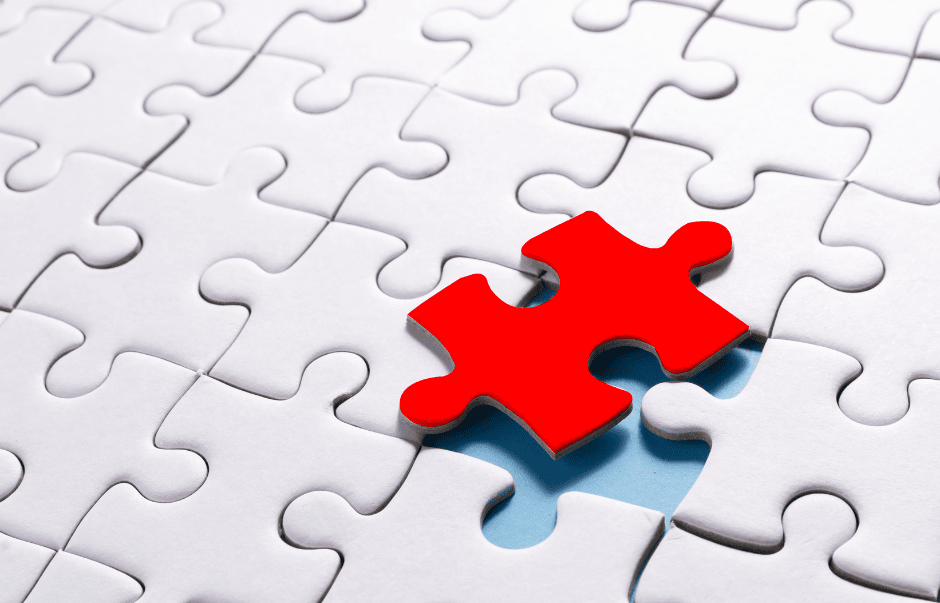
NLP is a highly effective practical framework that builds these capabilities that support better self-leadership, relationships and results. It’s the missing piece of the jigsaw, the difference that makes the difference in culture and teams.
Investing meaningfully in developing human skills, moves cooperation and collaboration from effortful to effective and we get sustainable performance and growth.
The skills can apply equally outside the workplace in our personal lives with family and friends too.
To find out more about NLP for Business training get in touch here.
If you enjoyed this blog, then please do share it on Linkedin, Facebook and Instagram.
Do connect with me on Linkedin, Facebook and Instagram
